Issue #1 — Introductions
Anima of Animals
Mit allen Augen sieht die Kreatur
das Offene. Nur unsre Augen sind
wie umgekehrt und ganz um sie gestellt
als Fallen, rings um ihren freien Ausgang."With full gaze, the creature sees into the Open.
Our eyes alone are as if inverted,
set like traps around it,
encircling its free momentum."
The animal in Rilke dwells within space. Here I will designate the Open as a lived field1, a world neither cut off from the being that moves through it, nor reduced to an object by a gaze that turns back upon itself.
Humans, by contrast, are a reflection of the world; a world itself reversed by a monotheistic god who turns humanity back toward himself. This human gaze glides over things, only to then return to itself, as though everything seen must be transcribed into a sign of a sign, or into an image, within what we call the world. The animal does not necessarily lack an awareness of its own body; rather, our perception adds to this relation a symbolic interval, a reflexive return that transforms space into a stage. This applies to any work of art that claims to film an animal body: the hand holding the camera is human, anesthetized, and guided by an eye that turns back upon itself, in search of an articulation and, thus, of signs. To film an animal’s eye is either to capture that entire tissue, in search of its own morphology so that it may be absorbed into our framework (its affects rendered legible, its interiority approached through tropes), or, decisively, to defy all instinct, allowing something of the animal (of the beast) to emerge before our language turns it into a problem or a question.
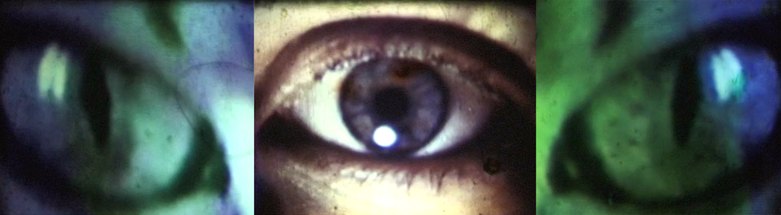
I think, then, of Jean Painlevé pouring gelatin over a sea urchin, immobilising it, while demanding that its flesh speak and respond beyond its skin. The gelatin solidifies and cools, revealing the organism’s internal architecture that allows us to peel away the covering from the organs without damaging them. The camera is not set up to film the image of a sea urchin, but the sea urchin itself, compelled to reveal a logic within what must be five hundred million years of life (out there), in abyssal habitats shaped by selective pressures that never had to contend with us. We should not be too quick, however, to interpret this strangeness as merely the result of evolutionary split. The sea urchin has no large frontal eyes, and there is no face onto which we could superimpose our own image; but, above all, it is the contemporary imagination that so rarely focuses on the dangling appendages of the unthought and the unnameable. Painlevé’s film therefore changes the stakes of mimesis, for it does not imitate what the human already recognizes, but instead gives visibility to a reality whose forms, through human history, it did not naturally possess.
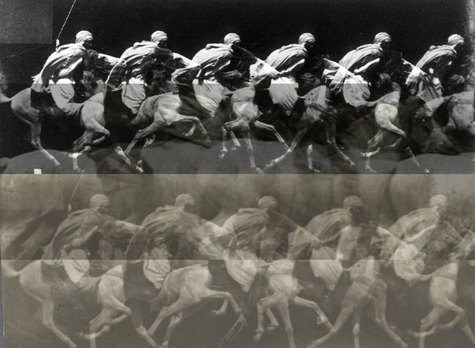
One then discovers, within the totality of being, structured lines that have rarely summoned us. This alone should already give us cause for concern, for when Étienne-Jules Marey began using chronophotography to capture the four hooves lifting off the ground in one single instant, he was searching for a way to alleviate a human condition through movement (a matter of refinement through biomechanical description). Painlevé, by contrast, treats the animal neither as a mechanism nor as a pattern of behavior. Within the organism, he seeks a multitude of lines that had been homogenized by objectifying it; he had locked the window that was Jean Painlevé's own2. He had turned 4 into 1, whereas Painlevé had turned 1 into 4; he had specified the sea urchins, restoring their distinctiveness, and thereby opening them to human perception. Yet, before we even came into the picture, before everything became a matter of overcoming a mere survival impulse, the animal form already exceeded the demands of pure survival. How can we explain that peacock feathers evolved as elements and effects capable of being appreciated by other peacocks solely through representation, if they transcend our gaze (strangely focused) through the cliché of "look at this," the very definition of the excess that has haunted history, but not us.
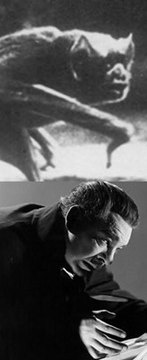
This brings me, thanks to a coincidence between the formulation of the preceding sentence, to wanting to speak of the same outcome produced by bats: the links between Painlevé and genre cinema. One is the vampiric diving-beetle; the other, duly titled Son of Dracula, Dracula himself in effect. The diving-beetle is an insect that, instead of feeding on its prey whole, siphons and sucks it, hence Painlevé's epithet describing it as a "vampire," an association also found in Murnau, with Nosferatu. But whereas Orlock (Nosferatu) is driven by the desire for a unified Europe3, by class psychology and by the fear of contamination; Orlock, who craves our terror also demands that we avoid it, and builds his horror to align with our narrative framework; he is nothing next to the diving-beetle, for the latter means nothing at all! The vampire's blood flows and spills without consequence, the blood passes through threats without ever eroding them (and in this it irrigates them, since the historicity of blood being perceived as a threat has changed its function - the water can gnaw a stone but also nourish a field). This blood flows is a sign that the manner in which its body reacts to stimuli… is an active response to the way it is configured by chemistry, which can be likened to the Open, since the animal reacts first through its body, it therefore has no mediation in its "own" reflection. This is not so much a threat as a mechanism infinitely worse than Nosferatu, as this animal was not created for us and did not need our terror to function at full capacity. The diving-beetle was never a threat to us any more than to its own mechanism; it existed outside of us, outside of our reflection, and above all, outside the modern horror created by vampires.
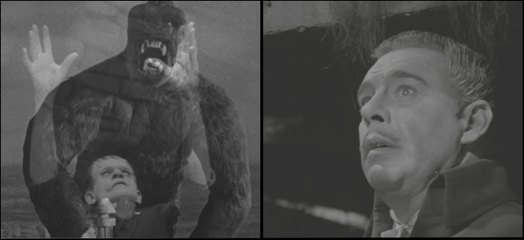
This stimuli, Niko Tinbergen demonstrated in his work on reflex arcs4 in the grey goose where an egg is snatched away without the animal's knowledge; as a result, the goose continues to act as though there were still an egg on the ground. The diminished stimulus may seem less interesting, but it has its own carcinoma - an external governor, so to speak, less subject to the sensation of a felt experience than to a muted signal. Even the political gesture (and not only, of course, the scientific gesture) has always been the same in ethology since Uexküll: it ensured that the biological coherence of species remains self-sufficient, irreducible to our categories. This must be central to it, because cinema has already shown them all (King Kong screams, Frankenstein extends his arms, and Dracula weeps). This otherness has faded away in this return to the human that each of us experiences when faced with the strangeness of a being who does not want us, to whom we are otherwise useless on the outside, subsisting entirely within pure immanence (indifferent to our gaze), which returns us back to humanity, already aware of this dilemma, where integrity will weigh upon its image.
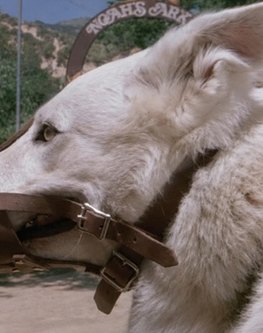
A journey through space toward the world of man, where every route and every method by which he solves the same problem in reverse; this is how Walt Disney does it, giving an animal a human form… so as not to bring us back to that monster. Bambi loses his mother along with the whole set of reactions modeled on human grief, whose stages and pace are determined by the affective customs of our culture, where all are affective characteristics rather than any emotional physiology of a doe. If there is, in the living sense, a thing that possesses subjectivity - an inner perspective on the world - then this thing can be grasped in an irreducible manner not by any other thought, but first because, in order to exist as having subjectivity (according to what it means to have it), it is always for someone else, or rather embodied in someone-in-the- world. Wittgenstein had said it from the other side: "Even if a lion could talk, we could not understand him." In Stroheim's Greed, the dog makes an appearance, just as it also does within the story itself, indifferent to human language. Dogs are wonderful and adorable (even the one in White Dog), but deep down the only thing we love is our own capacity to love the earth; we love ourselves, reflected back to us.
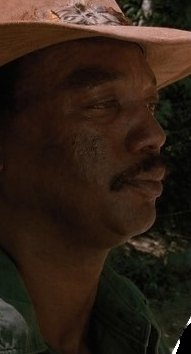
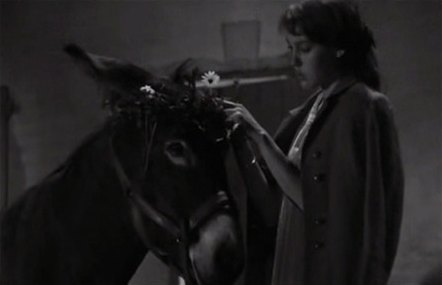
That said, not everything is black or white: in Au hasard Balthazar, donkey’s features correspond to the violence of the substitution that they reject elsewhere; beyond the shots, there is no expressiveness on the donkey's face, nor is there music at the moment of their death. Balthazar remains distant enough to elude recognition, yet close enough for its being to remain opaque in itself, before we decide what or who it was. In a certain way, Balthazar is an agony that escapes the abyss that, on the one hand, acts as a mirror to our souls, and, on the other, forces us to live with the guilt of their presence without abolishing it. For many filmmakers, more than anything else, it is a limit that emerges from the very monster of the frame, but first and foremost the body, a constraint that comes from the animal. The body does not take its role as an image seriously, not so much as an “actor” in a role, but rather as embodied space, though it fulfills this role hesitantly by functioning as if absent, without making any calculations regarding its relationship to the camera, and without any iterative account of how meaning traces back from its gestures.. It is simply there, weighed down by what was already there before the film and by what will still be there after.
Ford, for example, sees animals as bodies in motion that serve to expand the ranks of the living community (not because this might have any dramatic value, but because it brought into the frame neither air nor shadow). Even below humans, for these two forms of life contribute together to a shared living community through bodies occupying that space in those instants; as a "making-one" of nature and already established hierarchies, a reminder, then, by definition, that real space has mass, and thus that art must convey meaning. As for narrative, this very mass takes the place of the setting (the assessment of the animal and of ethnology); Scars on bark (The Leopard Man), olfactory marks (Wingseed), footprints in the snow (La Bête Errante), which reveals only a form of direct writing centered on the single idea that each is a successive production of bodies that fulfill their natural roles and respond to their physicality, under the influence of forces and movements that shape its form while remaining unaware of its outcome, and without intentionally offering anything. This was illustrated for the digger wasp by Tinbergen, who showed that it apparently memorizes the visual landmarks surrounding its nest before setting out to hunt: move those landmarks a few meters while it is away, and, when it returns, it will search where they now are, rather than where the entrance to its burrow actually is. Whether due to its superior ability in localization, the body has scanned (and continues to scan) space; yet such a cartography is also potentially deceptive, when I think of Love Torn in a Dream and its assertion that map- making claims a porosity of sorts, one that is paradoxical, but described through the prism of invagination rather than through that of topography, nonetheless allowing a non-reflexive engagement with its own context, the opposite of which Grizzly Man showcases.
Timothy Treadwell walks in the mud of the earth with two bodies destined to meet, because they were meant to (or should we simply say they were lucky enough to cross paths) by pure chance, yet, contrary to this, the bear does not know that Treadwell is alive. These traces attest to the movement of two bodies through spaces that coexist in time, according to logics that make no sense to one another; and it is within this mutual ignorance, where the bear does not reenact the solitude into which the man has once again retreated, that the bear’s dignity is at stake. The logic of a trainable body, already tamed like a dog and disrupted even down to its remains, where it disintegrates and is absorbed into reflexes refracted by race, such that racism itself becomes an indicator of aggression at the mere sight of a Black embodiment without reflection (White Dog) (the sequence where Keys reconditions the dog with the reward system, attributed to the slaves of the period).
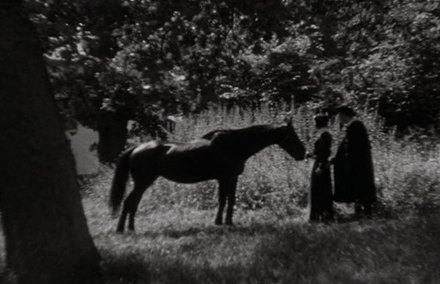
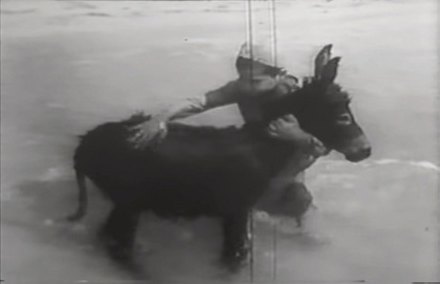
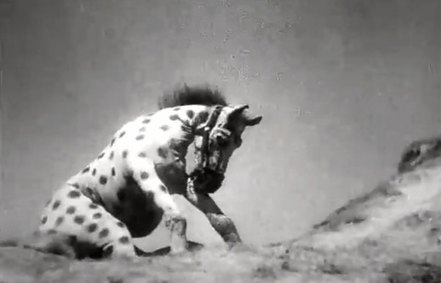
In Schastye (1934), Aleksandr Medvedkin, I found a major difference from the two aforementioned examples: the animal is neither an irrevocably Other being, objectified from the outside (Painlevé), nor our own psychic reflection (Disney), but a subject that works under shared material conditions, taking part in the same world, coexisting within it, all while not sharing the consciousness of that world.
Just like the peasant himself, Khmyr's horse in the collectivized village suffers the same privations, whether the harsh winter or the economy. With the burlesque precision of a director who knows that if comedy becomes possible everywhere, then unequal bodies are subjected to the same fate and rendered incapable of ever fully freeing themselves from one another, these monsters must be paraded among one another as in a hazardous circus. The horse is worn out and oppressed by a history vaster than itself, just as it is vaster than Khmyr. This means that one stands only at a physically Apollonian apogee of a crystallized thought, the peak of the thought being frozen by its own form, and if this formulation makes its way into the fabrication of the cop machinery (White Dog), theoretical constructions, or rather movements (even more radical!), the most explicitly neuro-linguistic one (that is PNL5), the thought can no longer be frozen and situated to the history that it created. Another reason why the bodies (rejected and pushed aside like disposable objects) persist at the heart of ambivalence, by inflecting with arrogance (La Bête Errante), bounded by a body confronting labels, affixed in any case onto the skin (without any marrow referring back to a label where it is destined to be located by this characteristic, invoked as if it were meat). This is largely atypical, between the two, for in their shared shots (close-up shots between Schastye and White Dog), bodies suffer together along the continuum of space toward the camera, equally vulnerable and wounded, like stars drawing energy from one another without any one of them burning intensely in order to become more luminous.
Jean Renoir does something similar in La Règle du jeu (1939), barely a few weeks before the outbreak of the war. The hunting scene films the rabbits and pheasants being shot down with the same serene rhythm as the ascent, as the dance; the killers, in their château, share the same precision of the method, rhyming brutality with leisurely weekends. The blood of the hunt coexists with the blood on a waltzing ballroom floor (even the vampire did not have as much), without being recognized by either side, silently confronting a moral equivalence. This flattening is often within Renoir's scheme of things: the corpses of dead animals carry the same cinematic weight as the living aristocrats (which I would have liked to see more often in Stroheim).
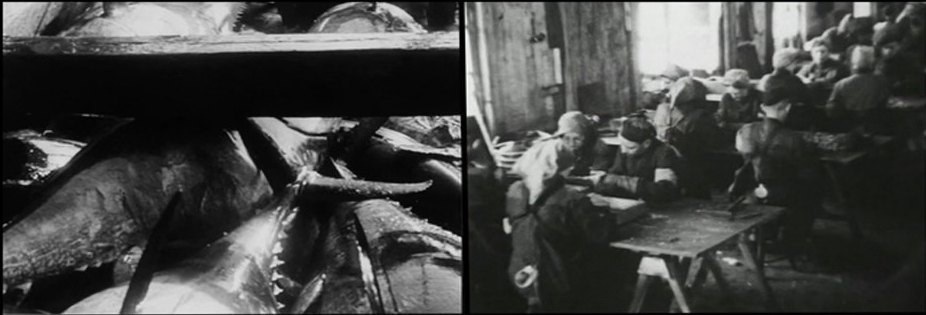
No one understands this balance better than Howard Hawks, who Approaches a form of intelligence that the narrative will encounter along the way, rather than something it will inherently become. In Hatari!, the final scene, where the captive baby elephants free themselves from their pen in hopes of finding Anna Maria again, was done of their own free will. For his part, Hawks does not comment on this moral shift, contenting himself with noting that human needs can interrupt an animal's time when it suits them. For example, the leopard that cuts through the comedy in Bringing Up Baby (1938) does not need to signify anything, for it accepts it as a given. It is far more worthwhile that we witness the animal element coming into play within cinematic narrative, whether because of such a freely exploitative mechanism of cinema that accomplishes something beyond the linearity of human history. But, outside of the creative mission, carrying them to this instant also compels closure, as it will force it. Unlike Stromboli (1950), which manages to do the same thing with the ritual of the mattanza. One might imagine this was done through a lens rather than presented, but Ingrid Bergman's image conveys an emotional intensity at once present within the associated couple and within the fish; the image bursts, literally, with shot after shot of dying tuna, one harpoon after another, in a violence that allows for no shred of narrative logic, for in leaping from Being toward Meaning, it has no time for everything that assails it.
In the second half of the nineteenth century, as urban moralities crystallized into hygiene standards, and a nascent secularization displaced the common body through processes of dispossession, industrial slaughterhouses spread beyond the cities, transforming meat into an invisibility barely perceptible to the odour of the life from which it emanates.
An Eternal Treblinka covered the American industrial slaughterhouses that drew up the plans for the Nazi extermination camps. This succession of deaths in the form of corpses, of animals first and then of humans, can only be a plausible continuity because it rests upon a prior erasure, the cosmic relegation to the rank of commodity, endowed with an enterprising force within the mechanisms of industrial transformation. In filming the Vaugirard and La Villette slaughterhouses in 1949, the workers eat with half-carcasses laid out; blood flows in the gutters while the work continues, as death offers a backdrop (which Farocki delights in exploiting in Respite), a commonplace feature of the workplace. Franju and Painlevé are only two bodies stemming from a single body, but they also share a theory of the body, and thus a common horror confronted with its captivity (they worked on this very same film). Likewise: Luc Moullet, for one of his short films (La Cabale des Oursins): the term mixture appears in these agglutinated masses that allow for spirals, quasi-urchin-like, under a name that no longer signifies exactly anything anymore (for Painlevé's sea urchins have nothing to do with it), likewise with Le Sang des bêtes and its approximation of the extermination camps. What cinema can do against this kind of logic, by showing an animal at every instant and in every choice of distance, so as not to let that presence slip away into death before the assembly line, or the commodity, or the forgetting that make everything else possible, is not merely to make us aware of slaughterhouses.
Brakhage describes, in Mothlight, the result as perceived by a moth, from birth to death: an attempt, then, to evoke a vision born "here" within this body, except that it is irrefutable, because it equates representation with the absence of mediation, without even passing through figurative devices, and contrary to what one might read along a dialectical line. To force the body to bear witness, through technology, to its own murder filmed head-on, does not reanimate the animal on its own terms, but reveals it by signifying according to conditions fixed by theology rather than by ethology. This brings me back to another example, an older one. The walls of Lascaux, seventeen thousand years before Brakhage, already had the form of animal bodies before the painters added anything to them. Water and time had sculpted the rock into reliefs of shoulders, flanks, heads, and the Paleolithic painters recognized these forms before completing them. It was not so much invention as recognition; after all, Painlevé does the same with gelatin (instead of film), the form lived within the matter before the artist arrived.
This is where the real “why” behind everything else that’s connected to it becomes clear, and we need to state it plainly. The animal in cinema: how could one avoid speaking of animals in cinema? Not even to defend animals, for we know well what the only means of defense that will come is. It is not that I am here pointing my finger at Hollywood for criticism, even if this is probably justified. But because the animal is cinema’s most frequently tested subject. Can one film something that, naturally, repels its own propensity to also become our natural tendency to turn everything into a sign? The animal inhabits our material world (it breathes, it bleeds, it hungers, it fears), but, according to the terms laid out (as set forth earlier), its interiority (if indeed there is some subjectivity or consciousness involved here) will be structurally inaccessible to us. From this follows the second consequence: what to do if biosemantics itself goes beyond the politics and ethics tied to the age. The hunter-gatherers who painted at Lascaux did not evidently distinguish, in their relation to the world, between the body of the prey and that of the represented animal: both alike sheltered a being that was not simply and entirely subject to imposition, but that had to enter into relation, to respond (without, however, being able to be dominated) such that non-human existence carries with it a portion of independence, that we ought not so much to use nature as to meet it on its own terms, and that it possesses something more than its place within our economy.
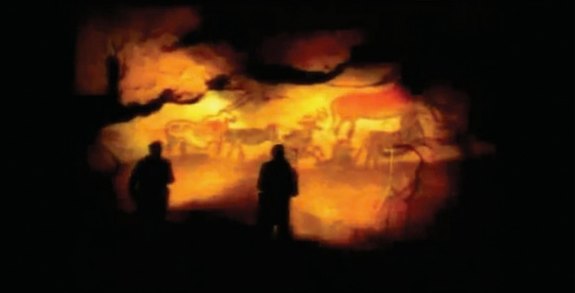
Anima (breath and soul in Latin) gave us both animal, that which has a soul, and animation, the act of giving life. When Disney animates Bambi, it keeps the promise of the word and yet thwarts it: it animates the animal in our place, replacing our anima with its own. When Brakhage glues moth wings onto the film, he animates in the original sense, letting the anima of the body pass through the image without replacing it. And the painters of Lascaux, who projected pigment onto the rock, in other words gave life to what was already there. The fact that this posture is found again in Painlevé's films showing the inevitable result of having taken seriously what ethology and philosophy of mind have laid bare. One question remains that these films pose but do not resolve: does cinema want to learn to see what exists before its gaze? The answer of great works is yes. The answer of the industry, so far, is no. And between these two answers lies a conception of what an existence we did not make is worth, one we cannot translate, and which, like Rilke's creature, continues to see the Open with all its eyes, indifferent to the trap we set for it.